India Polity
Complete M Laxmikanth Polity in 100 Parts by Dr Sidharth Arora | Crack UPSC CSE/IAS 2021/22/23
Men over men
You must first enable the government to control people and then the government itself must be put under control
Tryst with Destiny
Long years ago we made a tryst with destiny, and now the time comes when we shall redeem our pledge, not wholly or in full measure, but very substantially. At the stroke of the midnight hour, when the world sleeps, India will awake to life and freedom.
Internet History Sourcebooks: Modern History
Constitutional, Statutory and Quasi-Judicial Bodies
- Constitutional Bodies
- Statutory Bodies
- Regulatory Bodies
- Executive Bodies
- Judicial Bodies
- Quasi-judicial Bodies
Constitutional, Statutory and Quasi-Judicial Bodies - Indian Polity Notes for UPSC
Parliament
- 2.5 lakhs per minute cost of running parliament
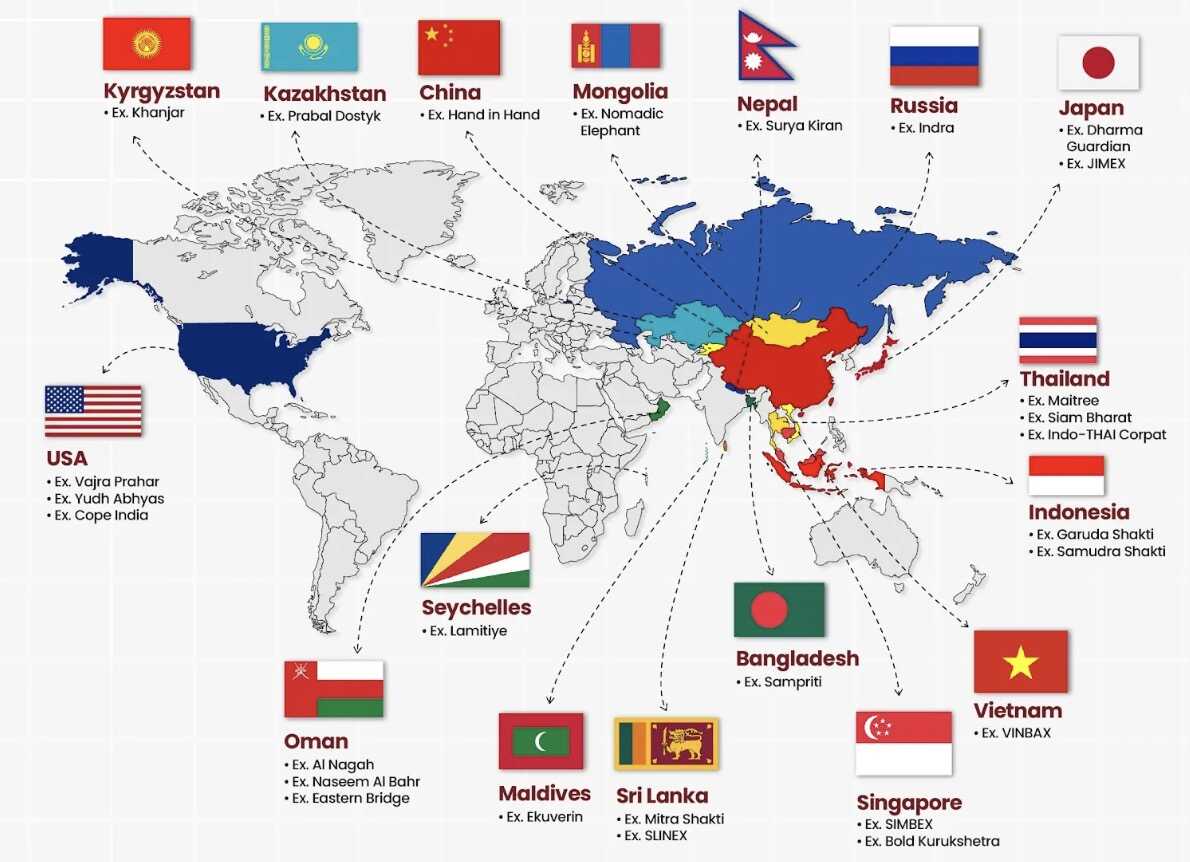
Bilateral Exercises of the Indian Armed Forces
Narendra Modi / PM Modi
- Tanashah - dictator
- More lies than others
- Narcissist
- 75 TOP FAILS of Modiji (part 1) - YouTube
- Top MODI MAGIC moments (part 2 of 3) - YouTube
- Anti-incumbency - Wikipedia
- Modi in Bengal election ft. Non-Veg | The Mulk
Modi ni to who
Modi ni to who - no one, it will be modi only, modi is a great person. Just itna bda desh chalana akele mushkil h, unke aas pass ke log sahi kaam ni kr rhe h, so unki help karni hogi humko.
Just thoda bhatak gye h, unko sahi rah me lana h.
Unko nazar lag gyi h, itna acha kaam krte the. Thoda unka is time me humko support krna hoga.
Politics
- MP Cough Syrup Tragedy | India's Fake Medicine Crisis | Who's The Next Victim? | Akash Banerjee - YouTube
- Bihar ke jeetne waale ko baazigar kehte hain | Ep. 3 : My X's stories - YouTube
References
- Fantastic Lies and Where to Find Them (in Case You Want to Fact-Check the PM) - The Wire
- https://factsmodified.factchecker.in/
- Fact-checking five days of Narendra Modi’s speeches: A catalogue of lies
- Inside Indian polls: Modi’s lies, fake news and media that does not question
- 43 Modi Claims That Are Not True, Over 5 Years
- PM Modi's Viral 'Teleprompter Fail' Video: AAP Takes DIG at PM Says 'Like BJP, Teleprompter Also...' - YouTube
- Should RSS Be Banned? | Nope w/ Kunal Kamra ft Shamsul Islam | 044 - YouTube
The Indian Prison System
- Administrative Control: Jails come under the direct administration of the State Government (Executive branch), specifically the Prison/Correctional Services Department. They are governed by the Prisons Act, 1894, and state-specific prison manuals.
- Judicial Role: The Judiciary does not run prisons. Its role is to decide guilt, hand down sentences, and act as a watchdog to protect inmates' fundamental human rights and prevent lawful custody violations.
Checks and Balances on Powerful Inmates (VIP Treatment)
- Medical Manipulation: If a politician uses executive influence to stay in a luxury hospital under the guise of an illness, the Judiciary can appoint an independent medical board (like AIIMS) to verify the claim and order them back to a standard cell.
- Public Scrutiny: Public Interest Litigations (PILs) allow activists or rivals to expose VIP treatment, prompting courts to demand CCTV footage or suspend colluding prison officials.
- Bail Loopholes: Under strict federal laws (like PMLA or UAPA), the burden of proof is reversed, making bail exceptionally difficult to secure. The judiciary can instantly cancel bail if a politician tampers with evidence or intimidates witnesses.
- Governing Restrictions:
- Under the 130th Constitutional Amendment Bill, if a Minister/Chief Minister is arrested on serious charges and fails to get bail within 30 consecutive days, they are automatically removed from office.
- Under the Representation of the People Act, 1951, any politician sentenced to 2 years or more faces immediate disqualification from office and is barred from contesting elections for an additional 6 years after release.
The Governor vs. State Legislature Deadlock
- The Death of "Deemed Assent": A 5-judge Supreme Court Constitution Bench (led by Justice B.R. Gavai in November 2025) ruled that a bill cannot automatically become a law just because a Governor delays signing it. The judiciary cannot pass a law on behalf of the executive due to the separation of powers.
- No Rigid Timelines: Courts cannot judicially prescribe fixed deadlines (like a 3-month rule) for a Governor to act, as Articles 200 and 201 were intentionally framed with flexibility.
- The "Return and Re-Pass" Weapon: Under Article 200, if a Governor rejects a bill and returns it, the State Assembly can pass the exact same bill a second time. Once re-passed, the Governor is constitutionally bound to sign it and cannot withhold assent again.
Shift in Law: "Before" vs. "After" (The Current Legal Landscape)
- The 2025 Shift: The Supreme Court moved away from a strict "Stopwatch" approach (April 2025) to a "Gentle Nudge" approach (November 2025).
- Expanded Discretion: The Governor's position was strengthened; they have independent discretion and are not strictly bound by the State Cabinet's advice on whether to sign or reserve a bill.
- The "Presidential" Loophole: A political deadlock is still highly possible. If the Supreme Court issues a Mandamus forcing a stalling Governor to make a decision, the Governor can bypass the state by "Reserving the Bill for the President" (Article 201). Once it enters the Union Government's domain, the state's "Re-Passage" weapon is nullified, and the bill can stay pending indefinitely.