Fruits

Mangoes / Mango
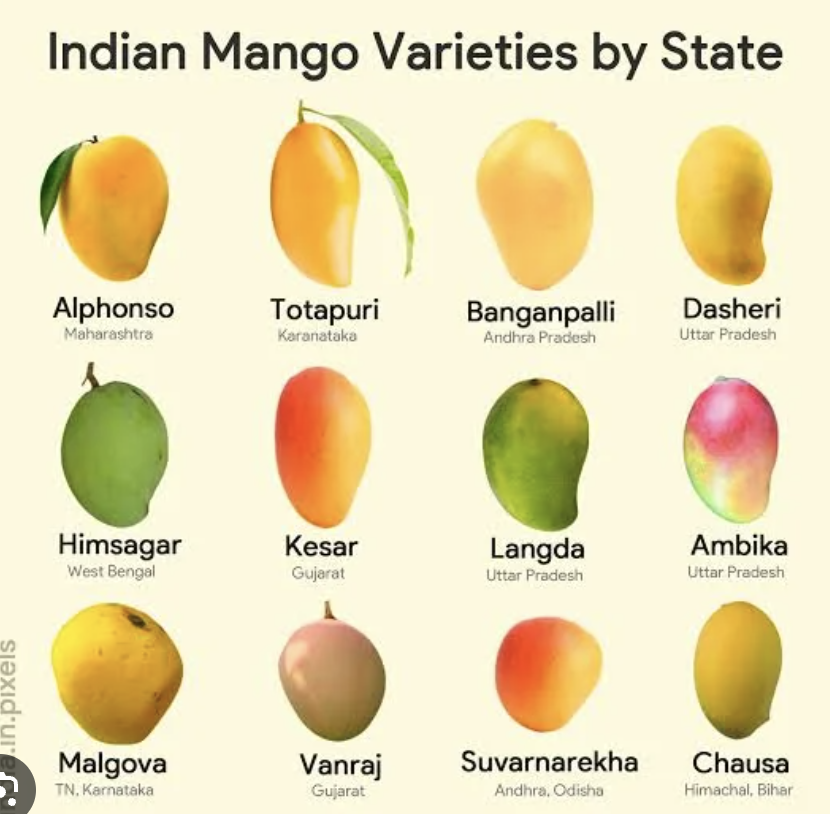
Iconic Indian Varieties
- Alphonso (Happus): Known as the "King of Mangoes". Grown primarily in Maharashtra and Karnataka, it is prized for its rich, saffron-colored, fiberless pulp and sweet taste.
- Banganapalli (Safeda): A large, obliquely oval mango from Andhra Pradesh and Tamil Nadu. It has smooth, yellow skin and sweet, firm flesh.
- Dashehari: A northern favorite from Uttar Pradesh. It is small-to-medium, elongated, and highly sweet with fiberless flesh.
- Langra: Famous in Uttar Pradesh, Bihar, and West Bengal, this green-when-ripe mango is incredibly fragrant and juicy.
- Kesar: Grown widely in Gujarat, this medium-oblong fruit has a red blush on the shoulders and is the top choice for pulps and juices.
- Totapuri: Easily recognized by its parrot-beak shape. Widely grown in Karnataka and Andhra Pradesh, it is slightly tart and mostly used for salads and processing.
Global & Hybrid Varieties
- Ataulfo (Honey Mango): A creamy, small Mexican/Latin American variety that melts in your mouth with a sweet, buttery flavor.
- Keitt & Kent: Popular commercial varieties in the Americas. Keitt stays green even when ripe and is perfect for slicing, while Kent is rich and less fibrous.
- Nam Dok Mai: A highly sought-after, elongated, and very sweet Thai mango.
- Amrapali: A premium hybrid developed by the IARI, crossing Dashehari and Neelum. It is known for its deep orange-red flesh and high regular yield.
- Miyazaki: A rare Japanese variety known for its ruby-red skin, high sweetness, and premium price point.
Soaking Mangoes
Soaking mangoes in water for 20 to 30 minutes before eating is recommended to wash away harmful pesticides, dissolve irritating sap, and reduce the fruit's internal "heat" which can cause acne and bloating
Key Benefits of Soaking Mangoes:
- Removes Toxins: It washes away surface dirt, pesticide residues, and harsh ripening agents (like calcium carbide).
- Dissolves Sap (Latex): The sticky sap near the stem can cause throat irritation and skin allergies. Soaking breaks down and removes these irritants.
- Reduces Body Heat: In traditional practices like Ayurveda, mangoes are considered thermogenic (heat-producing). Soaking cools the fruit to help prevent heat rashes, pimples, and digestive issues like acidity.
- Lowers Phytic Acid: Raw and ripe mangoes contain phytic acid—an "anti-nutrient" that can hinder the absorption of essential minerals. Soaking helps diminish these levels.