Diseases
Listening to your own body over a lifetime can tell you far more than any doctor in a small room for a rushed 10 minutes appointment.
Lifestyle related disease
- Obesity
- Hypertension
We've discovered that there are more than 70,000 ways the human body can fail. 70,000 different diagnoses for our 13 organ systems. We've developed 6,000 drugs, 4,000 medical and surgical procedures
Hyperthyroidism
Hyperthyroidism, or overactive thyroid, happens when the thyroid gland produces too much thyroid hormone. This has an impact throughout the body.
https://www.medicalnewstoday.com/articles/9153.php
Injury
- Don't put water on skin damage and never itch the blood clot appear after injury, it will heal faster
- Put betadine on it and don't cover it, cover while bathing
Dental & Oral Health
For comprehensive dental care information including brushing, flossing, water floss, cavities, gum disease, and teeth grinding, see Dental & Oral Health
Cough
- Drink hot ghee with adrak juice
- Drink hot water + lemon + honey (honey soothes your throat)
- Salt + water gargle
- Non productive cough / Dry cough
Viral infection
When you get infected with one of the many viruses that cause the common cold, your short-term symptoms usually last less than a week. It's not uncommon, however, for a cough to linger long after your other symptoms have improved.
These post-cold coughs are usually dry and can last for up to two months. They're usually the result of irritation in your airway, which is often overly sensitive after a viral illness.
This type of cough is difficult to treat and often requires time and patience. Coughing only increases the irritation in your airway, so try using throat lozenges and warm liquids to soothe your throat. This may help to reduce your coughing, giving your airway a chance to heal.
sucking on throat lozenges to moisturize and soothe irritated throat tissue
taking OTC cough suppressants, such as dextromethorphan (Robitussin), to suppress your cough reflex
adding honey to a hot drink to soothe irritated throat tissue
Antiseptic throat lozenges (e.g. Cofsils): contain mild antiseptics (2,4-Dichlorobenzyl Alcohol + Amylmetacresol) that slowly release while dissolving to reduce throat bacteria/viruses and numb irritation, easing cough triggered by post-nasal drip. Typical dosing is one lozenge every 3 hours; let it dissolve slowly, don't chew or swallow whole. As a side benefit, the frequent swallowing while sucking a lozenge also gently exercises the Eustachian tube muscles (see Airplane Ear / Barotrauma).
Sinusitis & Rhinopharyngitis
Rhinopharyngitis is inflammation/infection of both the nasal passages and throat (a step up from a plain common cold), often progressing into sinusitis (blocked, painful sinus cavities behind the nose, cheeks, and forehead).
- Yellow/green phlegm myth: the color comes from white blood cells fighting the infection, not proof of a bacterial infection needing antibiotics — it happens with viral infections too. Antibiotics are only warranted if a doctor identifies a bacterial cause.
- Referred ear and throat pain: the nose, sinuses, throat, and middle ear share connected passages. Swollen sinuses can block the Eustachian tube (trapping ear pressure — see Airplane Ear / Barotrauma) and post-nasal drip irritates the throat, causing soreness and a wet/dry cough combination.
- Home care: steam inhalation 2-3x/day, staying highly hydrated (warm water/soups) to thin mucus, warm compress over nose/eyes/forehead for pressure, warm salt-water gargles, sleeping with the head elevated so sinuses drain overnight.
- See a doctor if fever/facial pain persists past 2-3 days, phlegm stays thick and yellow, ear pain develops, or breathing/chest symptoms appear — an ENT can check for a secondary bacterial infection or contributing structural issues like a Deviated Nasal Septum.
Thalassaemia
Any of a group of hereditary haemolytic diseases caused by faulty haemoglobin synthesis, widespread in Mediterranean, African, and Asian countries.
Thalassemiais a blood disorder passed down through families (inherited) in which the body makes an abnormal form or inadequate amount of hemoglobin. Hemoglobin is the protein in red blood cells that carries oxygen.
It can be prevented in babies before birth
Hemorrhoid / Piles
Hemorrhoids, also calledpiles, are vascular structures in the anal canal.In their normal state, they are cushions that help with stool control.They become a disease when swollen or inflamed; the unqualified term "hemorrhoid" is often used to refer to the disease.The signs and symptoms of hemorrhoids depend on the type present.Internal hemorrhoids often result in painless, bright red rectal bleeding when defecating. External hemorrhoids often result in pain and swelling in the area of the anus.If bleeding occurs it is usually darker.Symptoms frequently get better after a few days.A skin tag may remain after the healing of an external hemorrhoid.
https://en.wikipedia.org/wiki/Hemorrhoid
Hernia
Aherniais the abnormal exit of tissue or an organ, such as the bowel, through the wall of the cavity in which it normally resides.Hernias come in a number of types.Most commonly they involve the abdomen, specifically the groin.Groin hernias are most common of the inguinal type but may also be femoral.Other hernias include hiatus, incisional, and umbilical hernias. Symptoms are present in about 66% of people with groin hernias.This may include pain or discomfort especially with coughing, exercise, or going to the bathroom. Often it gets worse throughout the day and improves when lying down.A bulging area may occur that becomes larger when bearing down.Groin hernias occur more often on the right than left side.The main concern is strangulation, where the blood supply to part of the bowel is blocked. This usually produces severe pain and tenderness of the area.Hiatus or hiatal hernias often result in heartburn but may also cause chest pain or pain with eating.
https://en.wikipedia.org/wiki/Hernia
Anorexia
An eating disorder characterized by markedly reduced appetite or total aversion to food.Anorexiais a serious psychological disorder. It is a condition that goes well beyond out-of-control dieting. The person withanorexia, most often a girl or young woman, initially begins dieting to lose weight.
Boils
- A boil is a common, painful infection of a hair follicle and the surrounding skin. It begins as a red lump, then fills with pus as white blood cells rush in to fight the infection. Good home care can often clear up a single boil, also known as a skin abscess. A doctor's care is needed when a boil resists treatment or develops in certain vulnerable areas of the body. See also Stye (Hordeolum) for the eyelid equivalent.
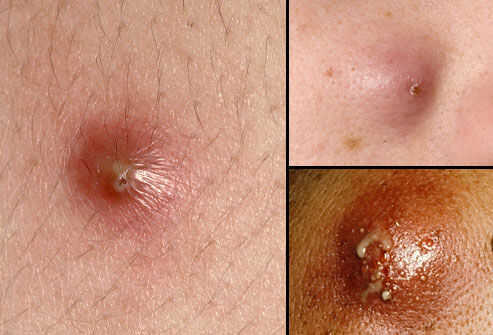
- You may also have a general feeling of ill health, fatigue, or a fever, which is reason to call a doctor.
- Most boils are caused by staph bacteria (Staphylococcus aureus). When a scrape, cut, or splinter breaks the skin, the bacteria can enter a hair follicle and start an infection.
- Not exactly, but the germs that cause boils (staph) are easily spread through skin-to-skin contact and contaminated objects. These bacteria usually do no harm unless they find a break in the skin. To avoid spreading staph, don't share towels, bedding, clothes, or sports gear while you have a boil. Avoid touching the boil, and keep it covered. Frequent hand washing can also help prevent spreading the bacteria.
- Since bacteria are everywhere in our environments and on many people's skin, the best defense against boils includes:
- Hand washing or use of alcohol-based hand sanitizer
- Careful cleaning of cuts, scrapes, and other wounds
- Keeping wounds covered
- Not sharing towels, sheets, razors, etc.
- Wash towels, sheets, and anything else in contact with an infected area in very hot water. Throw away any wound dressings in a tightly sealed bag.
- Since bacteria are everywhere in our environments and on many people's skin, the best defense against boils includes:
- Types of Boil
- Carbuncle
When several boils form close together and join beneath the skin, it's called a carbuncle. They are most commonly found on the back and the neck but can develop anywhere. Men are more likely to develop carbuncles than women. A carbuncle tends to lie deeper beneath the skin than a boil and can take longer to heal.
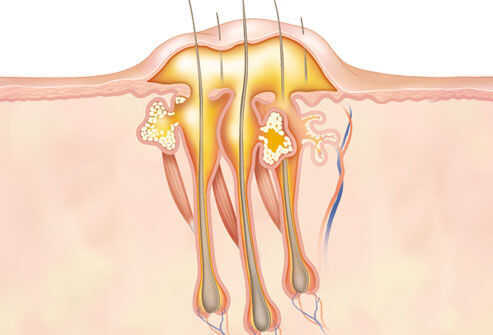
-
Cystic Acne
-
Armpit and Groin (hidradenitis suppurativa)
-
Pilonidal Abscess
-
Stye
-
Anyone can develop a boil. The risk increases with:
- Close contact with an infected person
- Acne, eczema, or other causes of breaks in the skin
- Diabetes
- A weakened immune system
- Poor nutrition
- Poor hygiene
- Exposure to harsh chemicals that irritate the skin
-
Treatment
- Apply warm, moist compresses several times a day to help a boil open and drain. After it starts draining, keep it clean, and continue using warm compresses -- a clean one every time. Change the bandage often and wash hands well. Resist the urge to squeeze or pop the boil. This can make the infection worse.
- When the boil starts draining, wash it with an antibacterial soap until all the pus is gone and clean with rubbing alcohol. Apply a medicated ointment (topical antibiotic) and a bandage. Continue to wash the infected area two to three times a day and to use warm compresses until the wound heals.
-
Warm compresses may promote the drainage and healing of carbuncles. Gently soak the carbuncle in warm water, or apply a clean, warm, moist washcloth for 20 minutes several times per day. Similar strategies include covering the carbuncle with a clean, dry cloth and gently applying a heating pad or hot water bottle for 20 minutes several times per day. After each use, washcloths or cloths should be washed in hot water and dried at a high temperature.
-
Washing the carbuncle and covering the area with a sterile bandage also may promote drainage and healing and help prevent the infection from spreading. Over-the-counter medications such as acetaminophen or ibuprofen can help relieve the pain of an inflamed carbuncle.
-
It's important to thoroughly wash your hands after touching a carbuncle. Launder any clothing, bedding, and towels that have touched a carbuncle and avoid sharing bedding, clothing, or other personal items.
-
Depending on severity, most carbuncles heal within two to three weeks after medical treatment.
-
When to Call the Doctor
If a boil doesn't heal after a week of home care, call your doctor. Other reasons to call include:
-
A boil on the face or spine
-
A fever or red streaks coming from the sore
-
A very large or painful boil
-
A boil that keeps coming back
-
The skin around the boil turns red or red streaks appear.
-
The pain becomes severe.
-
The boil does not drain.
-
A second boil appears.
-
Complications
- Sometimes, carbuncles are caused by methicillin-resistantStaphylococcus aureus(MRSA) bacteria, and require treatment with potent prescription antibiotics if the lesions are not drained properly.
Cold
A cold can cause a stuffy or runny nose, sore throat, and low fever, but is a cold bacterial or viral?
The common cold is caused by a number of different viruses, although rhinoviruses are most often the culprit.
There’s not much you can do to treat a cold except wait it out and use OTC medications to help relieve your symptoms.
Symptoms
Symptoms of a cold usually peak within 2 to 3 days and can include:
- Sneezing
- Stuffy nose
- Runny nose
- Sore throat
- Coughing
- Mucus dripping down your throat (post-nasal drip)
- Watery eyes
- Fever (although most people with colds do not have fever)
When viruses that cause colds first infect the nose and sinuses, the nose makes clear mucus. This helps wash the viruses from the nose and sinuses. After 2 or 3 days, mucus may change to a white, yellow, or green color. This is normal and does not mean you need an antibiotic.
Some symptoms, especially runny or stuffy nose and cough, can last for up to 10 to 14 days. Those symptoms should improve over time.
When to Seek Medical Care
- Trouble breathing or fast breathing
- Dehydration
- Fever that lasts longer than 4 days
- Symptoms that last more than 10 days without improvement
- Symptoms, such as fever or cough, that improve but then return or worsen
- Worsening of chronic medical conditions
Colds can have similar symptoms to flu. It can be difficult (or even impossible) to tell the difference between them based on symptoms alone.
How to Feel Better
Below are some ways you can feel better while your body fights off a cold:
- Get plenty of rest.
- Drink plenty of fluids.
- Use a clean humidifier or cool mist vaporizer.
- Use saline nasal spray or drops.
- For young children, use a rubber suction bulb to clear mucus.
- Breathe in steam from a bowl of hot water or shower.
- Suck on lozenges. Do not give lozenges to children younger than 4 years of age.
- Use honey to relieve cough for adults and children at least 1 year of age or older.
Core care (first 24–48 hours)
| What | How |
|---|---|
| Rest | Actual rest. Sleep is doing most of the work here. |
| Fluids | Warm water, soup, ORS. Sweating with fever dehydrates faster than expected. |
| Paracetamol 500mg | For fever, chills, body ache and throat pain. Every 6 hours as needed, max 4 doses in 24 hours. |
| Cetirizine 10mg | At night, for sneezing and runny nose. Causes drowsiness — bedtime only. |
| Steam inhalation | Twice a day. Genuinely effective for congestion. |
| Saline nasal drops/spray | Safe to use frequently; helps more than most people expect. |
Electrode steam vaporizers (e.g. Optima): unlike a kettle with a metal heating element, these pass electricity directly through the water between two electrodes hanging from the lid — the water itself is the heating element. A little sparking/glowing at the bottom is a normal side effect of this design, especially once salt is added: salt makes water conduct electricity more aggressively, boiling it faster but also increasing current and visible arcing. Start with plain tap water before adding salt; very bright/violent sparking or uncontrolled boiling means too much salt was added. Never open the lid, touch the water, or add salt while it's plugged in, since live current is passing through it.
For the throat specifically
- Salt water gargles — ½ tsp salt in warm water, 3–4× daily. Unglamorous but the single most effective measure.
- Warm liquids — tea, haldi doodh, soup. Cold and very spicy foods will sting.
- Lozenges (Strepsils, Vicks) or a spoon of honey — coats the throat for temporary relief.
- Rest your voice. Talk only as much as needed.
- Keep the air from getting too dry if a fan or AC runs all night.
Common Cold | Antibiotic Use | CDC
Flu vs Common Cold
Influenza (flu) and the common cold are both contagious respiratory illnesses, but they are caused by different viruses. Flu is caused by influenza viruses only, whereas the common cold can be caused by a number of different viruses, including rhinoviruses, parainfluenza, and seasonal coronaviruses. Seasonal coronaviruses should not be confused with SARS-CoV-2, the virus that causes COVID-19. Because flu and the common cold have similar symptoms, it can be difficult to tell the difference between them based on symptoms alone. In general, flu is worse than the common cold, and symptoms are typically more intense and begin more abruptly. Colds are usually milder than flu. People with colds are more likely to have a runny or stuffy nose than people who have flu. Colds generally do not result in serious health problems, such as pneumonia, bacterial infections, or hospitalizations. Flu can have serious associated complications.
Aphasia
Aphasia is an inability to comprehend or formulate language because of damage to specific brain regions.
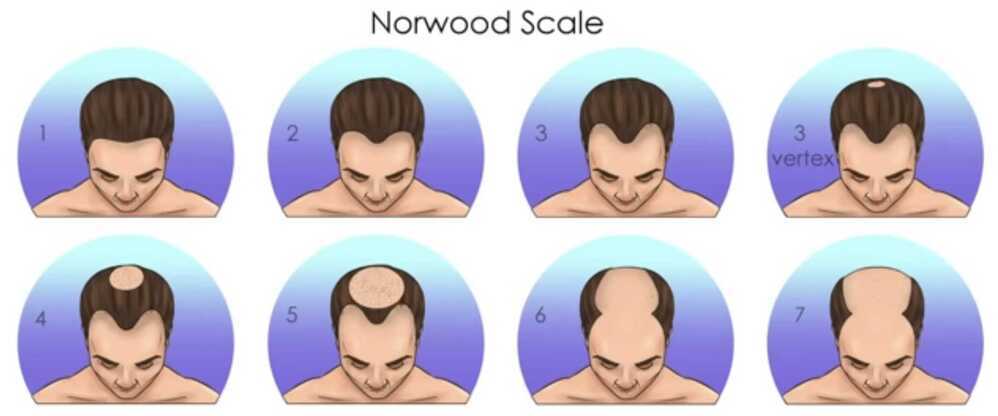
Norwood scale
The Dreadful Business of Balding & Hair Loss - YouTube
Lead Poisioning
Tonsilitis
Understanding Tonsillitis - YouTube
Diabetes
See Diabetes - Comprehensive guide to types, symptoms, diagnosis, treatment, complications, and prevention
Mumps
Mumps: Causes, Symptoms & Treatments
Vaccine - The mumps vaccine is part of the MMR vaccine series, which also protects against measles and rubella. The CDC recommends that children receive two doses of the MMR vaccine, the first between 12 and 15 months of age and the second between 4 and 6 years of age, with at least four weeks between the doses. The vaccine is 96% effective against measles, 86% effective against mumps, and 89% effective against rubella.
JellyFish Sting
- Caladryl
- Delayed skin reaction
- Tetanus
- Vinegar
PCOS and PCOD
PCOD (Polycystic Ovarian Disease) and PCOS (Polycystic Ovary Syndrome) are both hormonal disorders that affect the ovaries. PCOD is generally less severe than PCOS
ADHD
ADHD, or Attention-Deficit/Hyperactivity Disorder, is a neurodevelopmental condition characterized by symptoms of inattention, hyperactivity, and impulsivity. These symptoms can manifest in different ways and impact various aspects of a person's life.
Allergy / Allergies
Sublingual immunotherapy (SLIT) is a needle-free treatment for allergies that involves placing a dose of allergen extract, either as a tablet or drops, under the tongue to increase tolerance to the allergen over time. Approved for grass, ragweed, and dust mite allergies, SLIT works by gradually exposing the immune system to small amounts of allergens, which calms the allergic response and reduces symptoms like sneezing, runny nose, and itchy eyes. It's a convenient, at-home treatment for those who prefer to avoid allergy shots.
Teeth Grinding (Bruxism)
See comprehensive guide: Dental & Oral Health - Teeth Grinding
Restless legs syndrome
- Restless legs syndrome(RLS) is anervous systemdisorderthat causes an overpowering urge to move your legs. It's also known as Willis-Ekbom disease.
- Doctors consider it a sleep disorder because it usually happens or gets worse while you're at rest. You might have trouble sleeping or sitting for a long time, such as in a theater or a car. It may get worse if you don't get treatment. Over time, a lack of sleep can cause problems at work or home.
- Doctors don't know what causes most cases of restless legs syndrome, but your genes might play a role. Nearly half of the people with RLS also have a family member with the condition.
- The five basic criteria for a diagnosis of RLS are:
- An overwhelming urge to move your legs, especially along with uncomfortable or unusual feelings
- An urge that starts or gets worse while you're at rest
- An urge that goes away, either partly or totally, when you move
- An urge that starts or gets worse in the evening
- Another condition, such as leg cramps, arthritis, or muscle pains, isn't causing it
- Other ways to treat RLS without drugs include:
- Hot baths
- Heating pads or ice packs on your legs
- A vibrating pad called Relaxis
- Try baths and massages. Soaking in a warm bath and massaging your legs can relax your muscles. (Leg massages)
- Apply warm or cool packs. Use of heat or cold, or alternating use of the two, may lessen your limb sensations.
- Establish good sleep hygiene. Fatigue tends to worsen symptoms ofRLS, so it's important that you practice good sleep hygiene. Ideally, have a cool, quiet, comfortable sleeping environment; go to bed and rise at the same time daily; and get at least seven hours of sleep nightly.
- Exercise. Getting moderate, regular exercise may relieve symptoms ofRLS, but overdoing it or working out too late in the day may intensify symptoms.
- Avoid caffeine. Sometimes cutting back on caffeine may help restless legs. Try to avoid caffeine-containing products, including chocolate, coffee, tea and soft drinks, for a few weeks to see if this helps.
- Consider using a foot wrap. A foot wrap specially designed for people with RLS puts pressure under your foot and may help relieve your symptoms.
- Restless legs syndrome is a lifelong condition that might get worse with age. But some people go into remission and don't have symptoms for days to years.
- There may be a connection between RLS and low levels of iron in the brain, even when blood tests show that your iron level is normal.
- https://www.webmd.com/brain/restless-legs-syndrome/restless-legs-syndrome-rls
- https://www.healthline.com/health/restless-leg-syndrome#facts-and-statistics-about-rls
gustatory rhinitis
Runny nose after eating
When a person's nose runs after eating without any other symptoms of an allergic reaction occurring, this is referred to as gustatory rhinitis.
Gustatory rhinitis affects many people after they eat hot or spicy foods. When a person eats these foods, a nerve called the trigeminal sensory nerve is stimulated, which causes the nose to run.
A person may prevent gustatory rhinitis by avoiding trigger foods. If their nose runs after eating any food, they can take certain medications to manage their symptoms. One such medication is topical intranasal atropine.
https://www.medicalnewstoday.com/articles/321678#causes
Aerophagia
Aerophagia is the medical term for excessive and repetitive air swallowing. We all ingest some air when we talk, eat, or laugh. People with aerophagia gulp so much air, it produces uncomfortable gastrointestinal symptoms. These symptoms includeabdominal distension,bloating,belching, and flatulence.
Aerophagia can be chronic (long term) or acute (short term), and can be related to physical as well as psychological factors.
- taking small bites and chewing food thoroughly before taking another one
- modifying how you swallow food or liquids
- eating with your mouth closed
- breathing slowly and deeply
- being mindful of open-mouth breathing
- Drink water using glass
- https://www.healthline.com/health/aerophagia
- Dry Mouth
- Some doctors recommend you sleep with a humidifier; it moisturizes the room and can help keep you moisturized
Irritation in mouth
Sodium Lauryl Sulfate-Free Toothpastes from Sensodyne
Sodium Lauryl Sulfate (SLS) is a common foaming agent that often causes a burning sensation because it is a powerful detergent that can be too aggressive for delicate oral tissues.
Core Mechanisms of Irritation
- Mucosal Disruption: SLS acts as a surfactant that can strip away the protective mucin layer (saliva coating) of your mouth. This leaves the sensitive underlying tissues exposed and vulnerable to chemical irritation.
- Protein Denaturation: It can biochemically denature proteins in your mouth, causing the top layer of the oral lining to separate or peel—a process known as oral mucosal desquamation.
- Increased Permeability: By weakening the oral barrier, SLS makes it easier for other irritants (like strong mint or alcohol-based mouthwashes) to penetrate and cause pain
Common Side Effects
- Burning & Dryness: Direct contact often results in a "scorched" feeling on the tongue, inner cheeks, or lips, often accompanied by a temporary dry mouth sensation.
- Canker Sores: While not a cause for everyone, SLS is a known trigger that can increase the frequency and painfulness of recurrent mouth ulcers.
- Taste Distortion: It can temporarily alter your taste buds—specifically by suppressing sweet receptors and enhancing bitter ones—which is why orange juice tastes bad after brushing.
Is it Necessary?
No. Foaming is primarily a psychological cue for "cleanliness" rather than a requirement for effective plaque removal. Many high-quality SLS-free toothpastes, like those from Sensodyne or Curaprox, use gentler alternatives like cocamidopropyl betaine to clean just as effectively without the burn.
Ingrown Hair
An ingrown hair occurs when a shaved or waxed hair curls back or grows sideways into the skin. It causes small, red, pimple-like bumps that may itch or hurt. Most clear up on their own, but you can speed healing and prevent them with simple care.
How to Treat an Ingrown Hair
- Stop hair removal: Avoid shaving, waxing, or tweezing the area until it is fully healed.
- Apply warmth: Place a warm, damp washcloth over the bump for 5–10 minutes to soften the skin and help the hair loosen.
- Exfoliate gently: Use a soft-bristled toothbrush or a mild scrub to gently remove dead skin cells over the bump.
- Guide the hair out: If the hair tip is visible, use sterile tweezers to gently pull it out. Do not dig into the skin, as this can cause scarring or infection.
Ingrown hairs can absolutely happen inside the nose. They usually occur when you pluck, tweeze, or wax your nasal hair, which causes the sharp edge of the remaining hair fragment to grow directly back into the delicate tissue of the nostril lining.
The Hidden Danger: The "Triangle of Death"
Medical professionals strictly warn against popping or aggressively picking at bumps inside the nose. The nose sits inside what is called the "danger triangle of the face". The veins in this specific area connect directly to the blood vessels leading to your brain. A deep bacterial infection here (like nasal vestibulitis or a furuncle) can travel backward and, in very rare cases, cause serious, life-threatening complications.