REITs and Alternative Investments
Category: Investment Products Type: Hybrid / Alternative Last Updated: 2026-06-08
Overview
Alternative investments provide diversification beyond traditional stocks and bonds. These assets are not typically linked to stock or bond markets, offering potential for higher returns and portfolio risk reduction.
REIT (Real Estate Investment Trusts)
What are REITs?
Real Estate Investment Trusts allow investors to own commercial real estate without large capital requirements.
Key Characteristics:
- Pooled investment in income-generating real estate
- Regular rental income distribution
- Professional management
- Liquidity (listed on stock exchanges)
- Lower entry barrier compared to direct real estate
Types of REITs
- Commercial REITs: Office buildings, retail spaces
- Residential REITs: Apartment complexes
- Industrial REITs: Warehouses, logistics centers
- Healthcare REITs: Hospitals, medical facilities
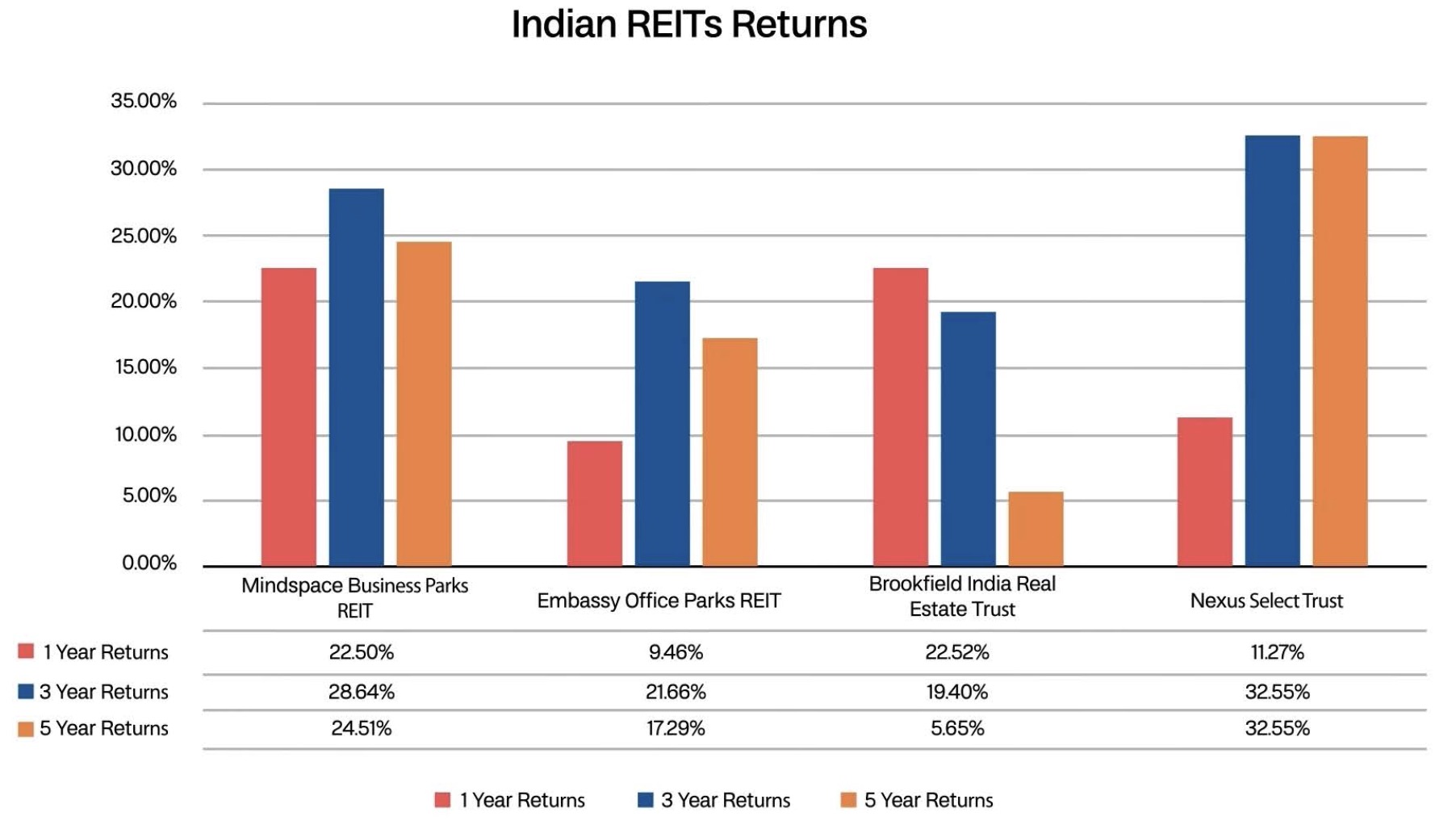
Indian REITs Performance
REIT vs InVIT
REITs (Real Estate Investment Trusts):
- Focus: Commercial real estate
- Assets: Office buildings, malls, warehouses
- Income: Rental income from tenants
InVITs (Infrastructure Investment Trusts):
- Focus: Infrastructure assets
- Assets: Roads, power transmission, telecom towers
- Income: User fees, tolls, lease rentals
Read: REIT vs InVIT Difference
Should REITs Be in Your Portfolio?
Pros:
- Regular income (rental yields typically 6-8%)
- Real estate exposure without property management hassle
- Inflation hedge
- Portfolio diversification
Cons:
- Interest rate sensitivity
- Market volatility (though less than stocks)
- Limited capital appreciation compared to direct property
Read: Do REITs Deserve a Place in Your Portfolio?
Fractional Real Estate
Platforms enabling retail investors to own commercial real estate in smaller proportions.
How It Works:
- Platform identifies investable Grade A property (commercial building/warehouse)
- Property has existing long-term tenant (ensures cash flow visibility)
- Investors buy fractional ownership
- Monthly rental income + price appreciation over time
Platforms:
- Strata - Investment in commercial property
- PropShare
- Others
Fees:
- Annual asset management fee: ~1%
- Share of profits above hurdle rate
Benefits:
- Low entry barrier (few lakhs vs crores for direct ownership)
- Professional management
- Monthly rental income with built-in escalations
- Capital appreciation potential
P2P Lending (Peer-to-Peer Lending)
Direct lending to borrowers through online platforms, bypassing traditional banks.
How It Works:
- Platforms match lenders with borrowers
- Lenders earn higher interest (12-35% vs FD rates)
- Borrowers get customized approval, competitive rates
- Platform provides: onboarding, credit evaluation, disbursement, collections
Platforms:
- Faircent
- Lendbox
- LiquiLoans
- RupeeCircle
Key Features:
- Select borrowers by: profile, location, loan reason, tenure (3-36 months)
- Desired interest rate: 12-35%
- Risk mitigation through diversification across multiple borrowers
Risks:
- Default risk (borrower non-payment)
- Platform risk (platform shutdown)
- Illiquidity (cannot exit mid-tenure)
- Regulatory changes
Invoice Discounting
Financing working capital by purchasing vendor receivables at a discount.
How It Works:
- Vendor supplies goods/services to buyer
- Payment due in 30-90 days
- Vendor sells invoice to investors at discount for immediate cash
- Investors earn return when buyer pays full amount
Platforms:
- KredX
- Jiraaf
- TradeCred
Investment Details:
- Minimum: Rs 50,000 (varies by deal)
- Tenure: 30-90 days (short-term)
- Returns: Pre-tax IRR up to 15%
- Invoices broken into fractional parts for smaller investors
Use Case: Small businesses fulfilling working capital requirements
High Yielding Fixed Income Investments
Alternative to traditional FDs with higher yields.
Platforms:
- Wint Wealth
- BondsKart
- AltiFi
Product Types:
- Government bonds
- AAA rated papers from lending institutions
- BBB rated corporate bonds (higher risk, higher return)
- Private bond placements
- Structured debt
Features:
- Investment as low as Rs 10,000
- Higher interest than FDs
- Range of risk-return profiles
Art Investments
Masterworks
Platform for buying and selling shares in iconic artworks.
- Fractional ownership of high-value art
- Professional authentication and storage
- Liquidity through secondary market
- Returns from art appreciation
Website: Masterworks
Other Alternative Investment Platforms
Startup/Private Equity Platforms
Growpital: Growpital
- Agricultural investment opportunities
Tyke Invest: Tyke
- Invest in Indian startups
- Angel investing opportunities
Alternative Investment Strategy
Allocation Guidelines:
- Start small (5-10% of portfolio)
- Diversify across alternative types
- Understand risk-return profile
- Ensure adequate liquidity in traditional assets
- Due diligence on platforms and underlying assets
Not linked to stock/bond markets - Acts as portfolio hedge and diversification
Higher returns - Potential for above-market returns
Access to unique opportunities - Investments not available through traditional channels
Risks to Consider
- Illiquidity: Difficult to exit before maturity
- Platform Risk: Dependence on platform solvency
- Regulatory Risk: Evolving regulations
- Complexity: Requires understanding of underlying assets
- Higher Fees: Management fees reduce net returns
- Default Risk: Borrower/investee may fail to pay
Tax Implications
- P2P Lending: Interest taxed as "Income from Other Sources" (slab rate)
- REITs: Rental income + capital gains (refer to latest tax rules)
- Invoice Discounting: Returns taxed as interest income (slab rate)
Consult tax professional for latest regulations.